
A gram is part of the metric system. The global scientific standard. A pound is part of the imperial system used primarily in the United States and the United Kingdom.
Understanding the difference between grams and pounds is essential for cooking, shipping, body weight tracking, and international trade. We will explore grams vs pounds formula in this article.
Grams vs Pounds: Key Differences
These are the key differences of grams vs pounds.
| Details | Gram (g) | Pound (lb) |
| System | Metric (SI) | Imperial / US customary |
| Symbol | g | lb |
| Base value | 0.001 kg | 0.45359237 kg |
| Equal to | 0.00220462 lb | 453.59237 g |
| Subdivisions | 1000 mg = 1 g | 16 oz = 1 lb |
| Used in | Worldwide | USA, UK mainly |
| Common use | Food, medicine, science | Body weight, groceries, shipping |
Which Is Bigger: A Gram or a Pound?
A pound is significantly larger than a gram. One pound equals 453.59 grams. That means a gram is roughly 0.0022 of a single pound more than 450 times smaller.
If you hold a standard paperclip, that is approximately 1 gram. A pound is the equivalent weight of holding 453 paperclips together.
Grams vs Pounds: Conversion Formula
Grams vs pounds formula:
Pounds = Grams ÷ 453.59237
Pounds to grams:
Grams = Pounds × 453.59237
Quick examples:
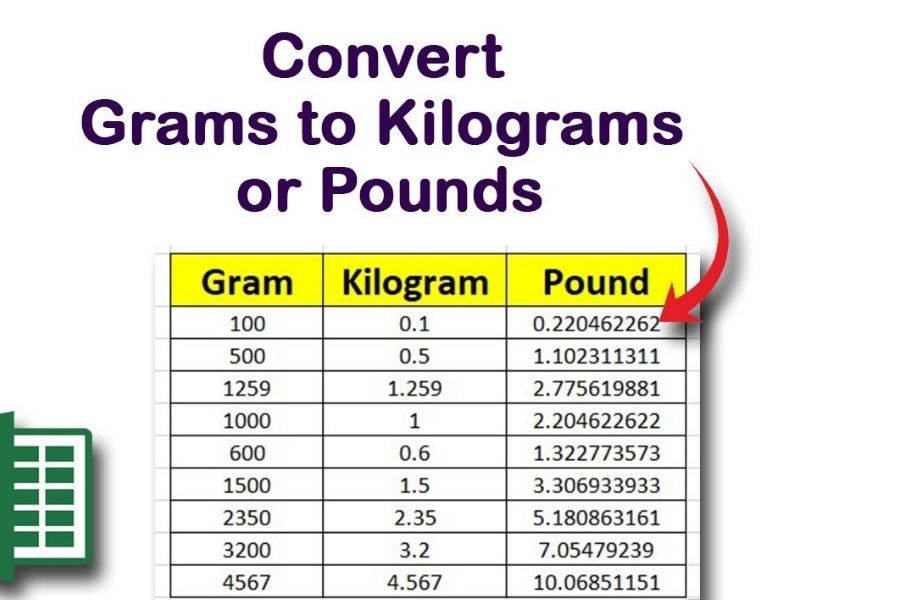
| Grams | Pounds |
| 100 g | 0.2205 lb |
| 250 g | 0.5512 lb |
| 500 g | 1.1023 lb |
| 1000 g | 2.2046 lb |
| 2000 g | 4.4092 lb |
When to Use Grams
Grams are the standard unit for:
Cooking and baking: Recipes from Europe, Asia, and most of the world use grams. Flour, sugar, butter, and spices are all measured in grams for precision.
Nutrition labels: Food packaging worldwide lists nutritional values per 100 grams. Protein, carbohydrates, fat, and sodium are all reported in grams.
Medicine: Drug dosages, supplement quantities, and medical measurements use grams and milligrams for accuracy.
Science and manufacturing: Laboratory measurements, chemical quantities, and small component specifications all use grams as the standard unit.
When to Use Pounds
Pounds are the standard unit for:
Body weight in the US: Americans measure body weight, fitness goals, and medical records in pounds. A person weighing 70 kg is approximately 154 lbs in the US system.
Grocery shopping in the US: Meat, produce, and bulk goods in American stores are priced and sold by the pound.
Shipping and logistics: US courier services, UPS, FedEx, USPS calculate shipping costs by pound. Converting product weight from grams vs pounds is essential before booking US shipments.
UK food labeling: UK law requires packaged food to display both metric (grams) and imperial (pounds and ounces) values on labels.
Grams vs Pounds: Which System Is More Accurate?
Grams vs pounds are equally accurate when used correctly. The metric system grams is more practical for precise scientific and commercial work because it is base-10. Dividing or multiplying by 10, 100, or 1000 is simpler than working with 16 ounces per pound or 14 pounds per stone.
The pound is more intuitive for everyday use in countries that grew up with the imperial system, particularly the United States. Most Americans have an immediate sense of how heavy one pound feels but would need to think harder about 453 grams.
For international use cooking across borders, shipping globally, reading nutrition labels from different countries converting between grams vs pounds is a daily necessity.
Grams vs Pounds in the US vs UK
The United States uses pounds almost exclusively for body weight and food retail. Grams appear mainly on nutrition labels required by FDA regulations.
The United Kingdom uses both. Grams and kilograms are used for food packaging and scientific contexts. Pounds and stones are used for body weight. One stone equals 14 pounds. UK law requires food packaging to show metric values, but imperial values are also permitted alongside them.
Most other countries across Europe, Asia, South America, and Africa use grams and kilograms exclusively. The pound is understood internationally but rarely used outside the US and UK in daily life.
Frequently Asked Questions
What is the difference between grams and pounds?
A gram is a metric unit of mass equal to one-thousandth of a kilogram. A pound is an imperial unit equal to 453.59 grams. Grams are used globally; pounds are used primarily in the US and UK.
How many grams equal 1 pound?
One pound equals exactly 453.59237 grams. For quick mental math, 454 grams is a reliable approximation.
Is a gram heavier or lighter than a pound?
A gram is much lighter. One pound equals 453.59 grams, making a pound more than 450 times heavier than a single gram.
Which is more accurate, grams or pounds?
Both are equally precise. Grams are easier to work with for scientific purposes because the metric system is base-10. Pounds require converting through 16 ounces, which is less straightforward for calculations.
Do UK recipes use grams or pounds?
Modern UK recipes use grams. Older British recipes may use pounds and ounces. UK food packaging legally requires grams but may also show pound values.